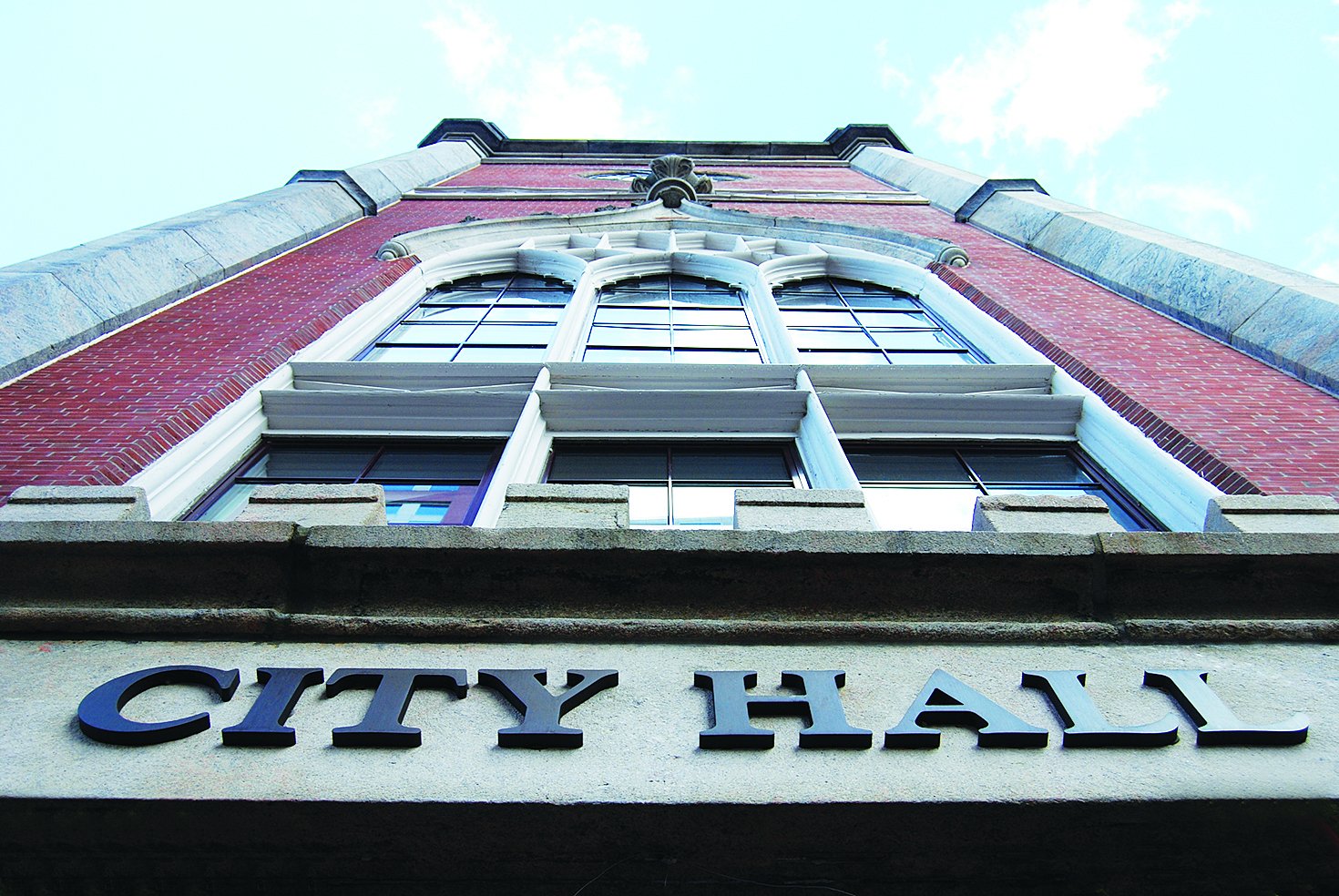
Manchester City Hall. Empowered by resident surveys seeking more development in the city, Mayor Jay Ruais’ administration is proposing legalizing small multifamily buildings in a significant swath of the city. iStock photo
Manchester officials are poised to pass major zoning changes that could lead to a modest increase in new “missing middle” housing across the city – mostly via new duplexes, triple-decker homes and other small-scale multifamily projects.
The changes contained in the second draft of the city’s proposed land use code reforms, which were released earlier this summer, could also lead to more large-scale apartment and condominium projects in the city’s central commercial district, as well as in the now largely vacant Northwest Business Park, according to city officials.
The latest draft of the proposed Manchester Land Use Code is set to be formally presented to the mayor and aldermen at an Oct. 7 meeting.
After various public hearings, the years-in-the-making zoning overhaul is expected to win final approval by the end of this year, officials cautiously predict.
“I do feel confident that it will pass,” said Christine Fajardo, the Ward 4 alderman and a member of the commission that produced the new comprehensive zoning plan for the city. “It will help push the city in the direction where we know it needs to go.”
And that direction is toward more affordable housing achieved largely by building more housing in Manchester.
Current Zoning Needed Overhaul
Among other things, the plan is winning praise from some for trying to simplify and streamline the city’s zoning rules and zoning permitting process.
Eli Leino, a land-use attorney at Bernstein Shur in Manchester, said the city’s current zoning code and districts are too convoluted and outdated, often requiring expensive and lengthy processes to obtain necessary variances in order to build new housing.
“The [new draft] better captures the reality of what we already have today in Manchester and what people want,” said Leino. “This code change should reduce the number of variance requests that can lead to a waste of time and money.”
But the draft is mostly being praised for pursuing a so-called “missing middle” strategy, which is defined in the draft as encouraging construction of more affordable smaller-scale housing projects in various parts of the city.
Those smaller-scale projects include two-unit duplexes, triple-decker homes and, in some cases, small apartment buildings ranging in size from four to nine homes.
Under the proposed zoning changes, the total amount of single-family-only housing areas across the city would be reduced by about 10 percent.
Minimum building lot sizes would also be slightly reduced in most single-family districts, from 12,500 square feet to 10,000 square feet in some cases, and from 7,500 square feet to 6,000 square feet in other cases.
Single-family districts currently reliant on septic tanks would not see any building-lot changes.
Balancing Residents’ Desires
Meanwhile, the amount of mixed-use areas – designated in the draft report as MX1 and MX2 districts, where a combination of single-family homes, small-scale multifamily and some commercial properties are permitted – would increase from 4.7 percent to 9.6 percent of the city’s total land mass.
As for future large-scale apartment and condo projects, they’d largely be restricted to the central commercial district of the city – and to the old Northwest Business Park that city officials hope will eventually be redeveloped into a mixed-use district.
No estimates were given on how many new housing units might be built under the new zoning rules.
But most agree that the number of new homes created via “missing middle” housing will be modest, perhaps in the hundreds or slightly higher.
Over time, the number of new homes created by the plan will likely be substantially higher in districts allowing large-scale apartment and condo developments.
Jeffrey Belanger, the city’s director of planning and community development, said the proposed zoning changes ultimately reflect the wishes of residents as expressed in surveys and at numerous public forums held across the city.
The bottom line: Most residents agreed that more affordable housing is indeed needed in Manchester – but not at a size and scale that could harm the city’s historic character, Belanger said.
Residents mostly wanted additional housing in the outer residential edges of the city to be confined to single-family and smaller-scale multifamily projects, such as duplexes, Belanger said.
And they wanted larger-scale housing developments mostly centered around the downtown area.
“We had a pretty decent sense of what people wanted and what was right for Manchester,” said Belanger, whose department played a leading role in producing the new Manchester land use code. “It was so important to get an idea what residents wanted.”
Some Wish for Bigger Changes
Some wish the draft overhaul plan was more aggressive in expanding the areas of the city where new housing of all kinds could be built.
“I think we could have done more in terms of density and in the variety of uses,” said Ward 4’s Fajardo.
Fajardo, whose ward includes portions of the central commercial district, added the downtown area seems to be “bearing the brunt” of planned new housing under the proposed zoning changes.
But she said compromises were ultimately needed – and she believes the second draft plan will indeed lead to a boost in new housing construction in Manchester.
She also praised the proposed zoning ordinance for being “more clear and more simplified” than currently worded zoning documents.
“It’s a much more user-friendly document,” she said.
Isabella Romero, an organizer for Manchester Neighbors Welcome, a community group pushing for more affordable housing, agreed that the final draft report could have been more aggressive in promoting new housing.
But she said she’s pleased that planners pursued a “missing middle” strategy of making it easier to build new duplexes, triple-deckers and small apartment buildings.
“There’s a lot to like in the [draft] report,” she said. “They’re taking a more gradual-growth approach to housing. They [city planners] were clearly conscious of what residents wanted.”
In a statement, Mayor Jay Ruais said he’s also largely pleased with the draft ordinance.
“It would help bring a range of benefits to Manchester’s citizens, from making it easier to build a house or start a business to preserving the history and character of the city that we all cherish,” he said.