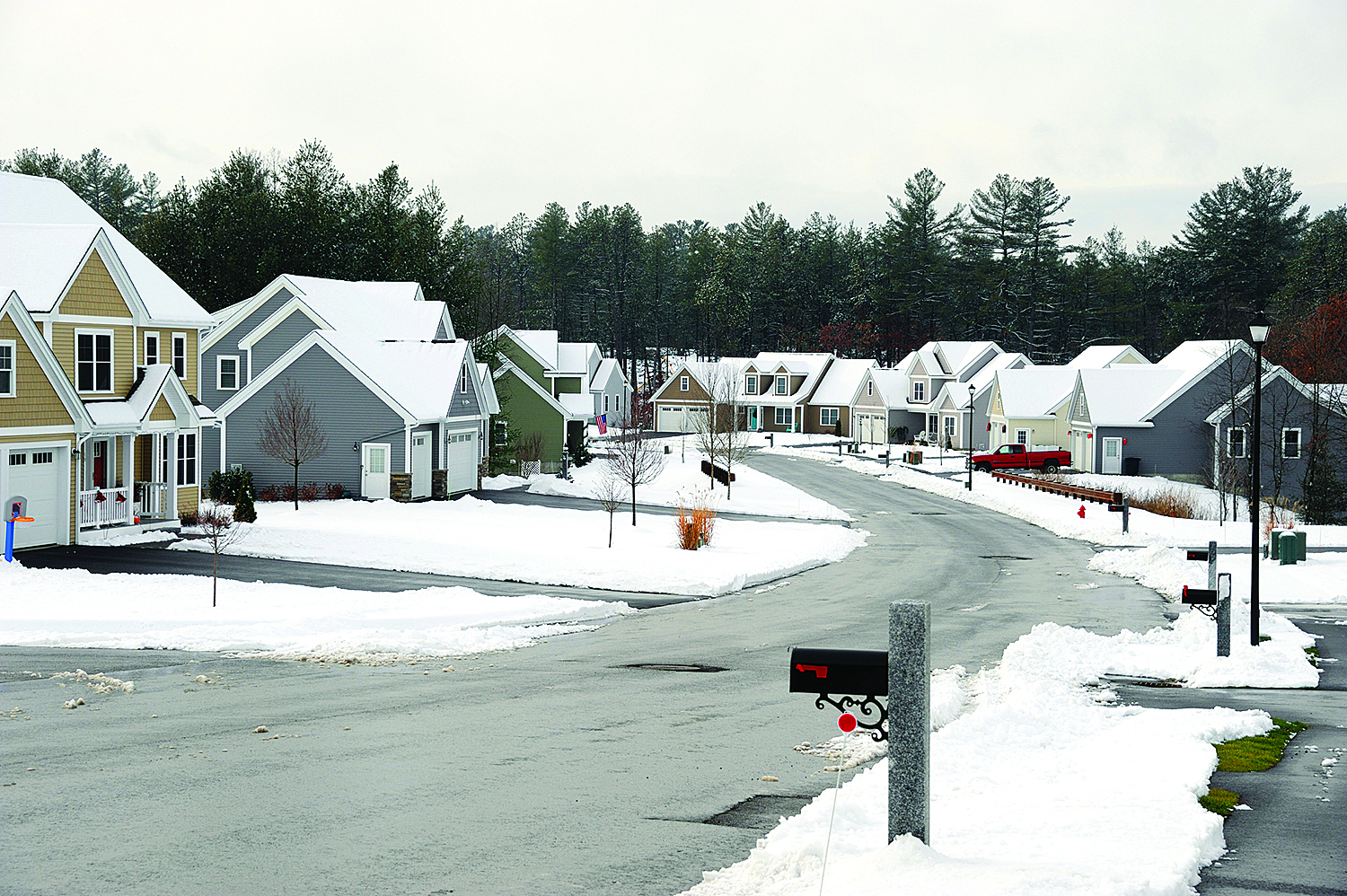
Housing advocates secured a number of wins in the last legislative session, but say they expect to face battles fending off repeal efforts. Barring that, expect lot-size reform to be among the ideas floated. iStock photo
Pro-housing advocates are expected to spend more time on the defensive this coming legislative session as critics push back on recently passed reforms designed to boost construction of new homes in New Hampshire.
This past spring’s legislative session in Concord was largely considered a success by those who support measures that address the state’s acute housing shortage and the need for new homes of all types.
Among the bills passed this past spring by lawmakers and signed into law by Gov. Kelly Ayotte were those calling for the streamlining of the state’s permitting process for new housing projects, allowing housing construction in previously designated commercial zones, and expanding the right to build accessory dwelling units on single-family lots.
Lawmakers also passed legislation that prohibits local governments from demanding more than one parking space per every new housing unit.
But now those very same laws are the target of repeal efforts in the coming session – and much time is expected to be spent reviewing those repeal bills and fending off major changes to recently passed reforms.
“I think a lot of this coming session will involve us playing defense,” said Rep. Joe Alexander, the Republican chair of the House Housing Committee. “There are NIMBY forces out there trying to roll back past gains. There are a lot of anti-development types who just don’t want to see more housing.”
Fights Would Consume Time, Energy
Alexander and others expressed confidence that most rollback efforts will fail, considering that many of last year’s housing measures were passed with overwhelming bipartisan support.
But Nick Taylor, executive director of Housing Action New Hampshire, said fending off repeal efforts is expected to consume a lot of valuable time and energy needed to develop additional pro-housing proposals.
“A lot of the session is going to be about ‘There’s no going back,’” he said. “One of our top priorities is to stop repeal efforts.”
Rob Dapice, CEO of the New Hampshire Housing Finance Authority, also known simply as New Hampshire Housing, agreed preserving recent gains will probably dominate much of the coming legislative session.
“These [new] laws need time to be implemented at the local level in order to bring down the cost of housing for NH residents,” he said.
New Reform Ideas in Play
Not that pro-housing efforts will be brought to a standstill this coming session.
Among issues expected to be addressed this winter and spring in Concord are proposals to limit building-lot sizes required by local governments and allow manufactured homes to be built in single-family districts.
Some are also eyeing additional state support for water, sewer and other infrastructure improvements needed to get many housing-development projects off the ground.
One issue that’s not expected to be addressed this coming session: a recent deep cut in the state’s Affordable Housing Fund, from $35 million to $10 million.
Because 2026 is considered a non-budget year at the State House, it will be difficult, if not impossible, to get those funds restored in the coming session, officials agree.
Manufactured Housing on the Table
A bill that would have allowed new “manufactured homes” to be located in single-family home districts in New Hampshire failed to pass last session – but backers are hoping compromise legislation can be hammered out and passed next year.
Manufactured homes are prefabricated housing built entirely in a factory, then transported and installed on steel chassis at housing sites.
They’re different from modular-constructed homes, which are only partially built in factories and which are installed on traditional home foundations, not on steel chassis.
But many people associate manufactured homes with mobile homes and trailer parks – and they don’t want them anywhere near their houses and neighborhoods out of fear they’ll hurt property values.
“A lot of the bias against them harken backs to old trailer parks,” said Housing Action NH’s Taylor.
“But manufactured housing has come a long way. They now look just like ranch houses. They’re basically the same thing. They’re fundamentally the same. It’s ridiculous that they’re banned in some places.”
Alexander said the manufactured-housing bill “almost made it” last session – and he hopes it can finally pass in the next session. “I’m going to push for it,” he said.
Hope for Lot Size Reform
This past spring, the New Hampshire Senate passed SB 284, which addressed the controversial lot-size issue, but the House opted to delay action on the legislation.
Now there’s discussions under way again on how to limit large lot-size requirements set by local governments, under the belief that more dense housing is critical to building more affordable housing.
Mike Skelton, president of the Business and Industry Association of New Hampshire, said current discussions are focusing on new state guidelines based on future homes’ proximity to either water-and-sewer lines or water wells.
“We’re not married to any specific approach,” said Skelton of new lot-size rules. “We just feel housing density is key moving forward.”
State Infrastructure Support Possible
While lawmakers are restricted on fund allocations in a non-budget year, they can make some appropriations if there’s any surplus money left over from the state’s fiscal 2025-2026 budget.
Alexander, the House Housing Committee chair, said he’d like to allocate more money to the state’s $5 million “Housing Champions” fund, which rewards towns with potential infrastructure support and production grants for following pro-growth housing policies.
“This [funding] bill probably won’t get done, but we’ll see,” said Alexander.
Taylor of Housing Action New Hampshire said there’s also talk of changes to the state’s “79E” program designed to provide added tax incentives to encourage developers to build new workforce and other affordable housing projects.
Lawmakers’ housing agenda probably won’t be as comprehensive as it was during this past spring’s productive session.
But Alexander said it won’t hurt to wait a year before possibly tackling more aggressive housing bills.
“We can see how the new laws are working,” he said. “We can then go back and make any necessary changes.