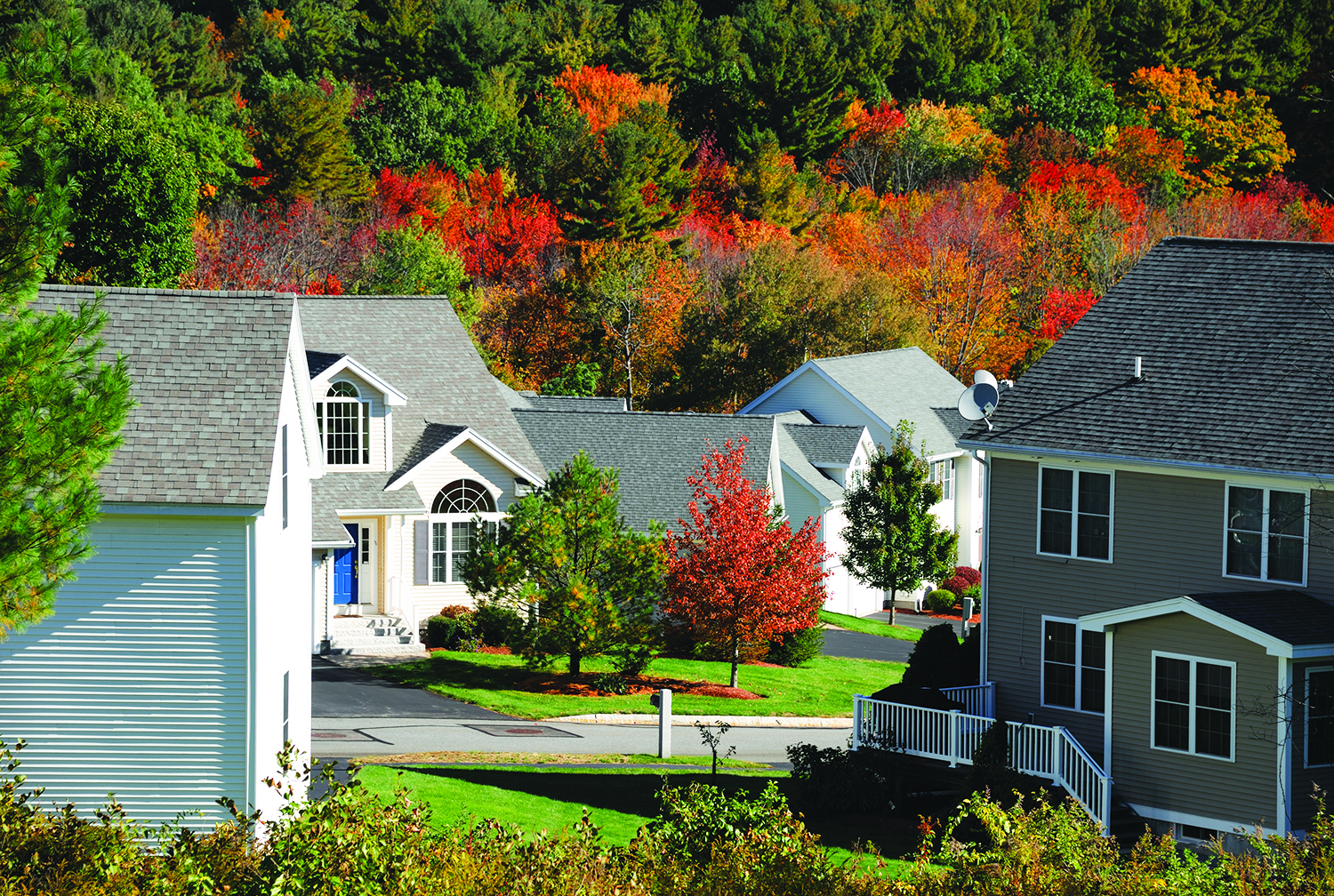
Housing advocates and industry leaders say they’re pleased at what got passed in Concord this session, but warn that next year could prove more contentious. iStock photo
In the end, they accomplished more than they expected.
Heading into the spring legislative session in Concord, pro-housing lawmakers and advocates were bracing for a major push to repeal a slew of landmark laws passed last year that made it easier to build new housing in New Hampshire.
“At the start of the session, we were first and foremost trying not to take a step backward on housing,” said Nick Taylor, executive director of Housing Action New Hampshire. “It was about beating back the repeal efforts, not much else.”
But not only did lawmakers swiftly and decisively defeat more than a dozen bills aimed at repealing last year’s housing gains, they also managed to pass a number of new bills designed to boost housing construction across the state.
They weren’t major pieces of legislation.
One dealt with making it easier to convert garages and barns on a homeowner’s property into accessory dwelling units (ADUs). Another clarified the right of developers to build multifamily housing on the sites of former strip malls and other commercial properties.
‘Modest Progress’
Still, even though housing bills passed this past spring were more modest in scope than legislation approved last year, lawmakers were pleased with the results.
“They were little steps forward – and that was good,” said Rep. Jim Kofalt, R-Wilton and the speaker pro tempore of the House of Representatives. “It will take time to see if it all leads to more [housing] construction. But I think we made some moves in a positive direction.”
Jack Ruderman, legislative affairs advisor at the New Hampshire Housing Finance Authority, agreed that the just completed session accomplished more than many had been expecting.
“Overall, the session was less frenetic” than in 2025, said Ruderman in an email interview. “[But] I think we saw modest progress on the housing front this session.”
Last year’s legislative session was indeed hard to beat when it comes to housing legislation.
Among proposals passed last year were bills that streamlined the state permitting process, significantly expanded the right to build ADUs, allowed residential construction in previously designated commercial zones, and placed limits on how many parking spaces local communities can require at new housing developments.
In many respects, approved 2026 legislation built upon prior years’ legislative gains, literally and figuratively (see sidebar). They include bills like HB 1010, which clarified last year’s bill that allowed multifamily housing construction on previously designated commercially zoned land, and HB 1079, which strengthens last year’s ADU law.
Many of the bills are awaiting action by Gov. Kelly Ayotte, whose office has not said what legislation she may or may not sign.
Housing Reforms Passed This Session
HB 1010: Clarifies last year’s bill that allowed multifamily housing construction on previously designated commercially zoned land. Among other things, the update makes it easier to build townhouses and other residential units on former strip-mall sites.
HB 1588: This tackles two key issues. The first allows municipalities to establish special assessment districts to pay for new housing developments’ infrastructure needs. The second component effectively prohibits towns from dictating that new homes’ parking spaces be in garages.
HB 1079: Strengthens last year’s ADU law by making it easier for homeowners to convert barns, garages and other non-conforming structures into accessory dwelling units.
HB 1103: Expands the Community Revitalization Tax Relief Incentive program by allowing municipalities to provide incentives to a wider variety of properties and projects, such as conversions of older downtown commercial buildings into housing.
SB 564: Limits municipalities from imposing strict development restrictions on dead-end roads for alleged public-safety reasons. Developers have often complained that public-safety requirements are routinely used by towns to block or severely limit new housing developments. The same bill also alters how municipalities can regulate the placement of utilities in certain buffers and open spaces.
Lawmakers’ To-Do List
Not all measures pushed by housing advocates passed this past session, such as legislation that would have allowed manufactured homes to be located in all residential zones. That legislation, HB135, was quietly dispatched to interim study, a parliamentary way of killing off a bill without a formal up-or-down vote.
Matt Mayberry, chief executive of the New Hampshire Home Builders Association, said he was overall pleased with the just-completed legislative session.
“We had to fight back the repeal efforts – and we did that,” he said. “And we managed to pass some bills as well. They may not be major bills, but they’ll help with new housing. It gives [builders] more flexibility.”
Looking ahead to the 2027 session, Mayberry said there are a number of issues he’d like to see lawmakers address, including making it easier to transport large modular-home components along state roadways.
He also said he’d like lawmakers to examine what state Department of Environmental Services rules might be tweaked to make it easier to build homes.
2027 Could Prove Contentious
Josh Greenwald, president of the New Hampshire Association of Realtors, said he was also pleased with the passage of modest housing measures this past session.
“I was also very impressed with how lawmakers fought off attempts to repeal what was accomplished in 2025,” he said.
But others warned that next year’s legislative session may be more contentious than the last two sessions, if only because 2027 will be a budget year in Concord.
“The question that now looms in the upcoming budget year is whether more funding can be made available to support the Affordable Housing Fund and the Housing Champions Program,” said NH Housing’s Ruderman.
Kofalt, the Wilton Republican, agreed that the past two sessions’ bipartisan cooperation on housing bills will likely come under strain next session when funding issues arise.
“I have no doubt Democrats will circle back next year and offer up a number of bills related to more funding – and I have no doubt many Republicans will oppose them,” he said.