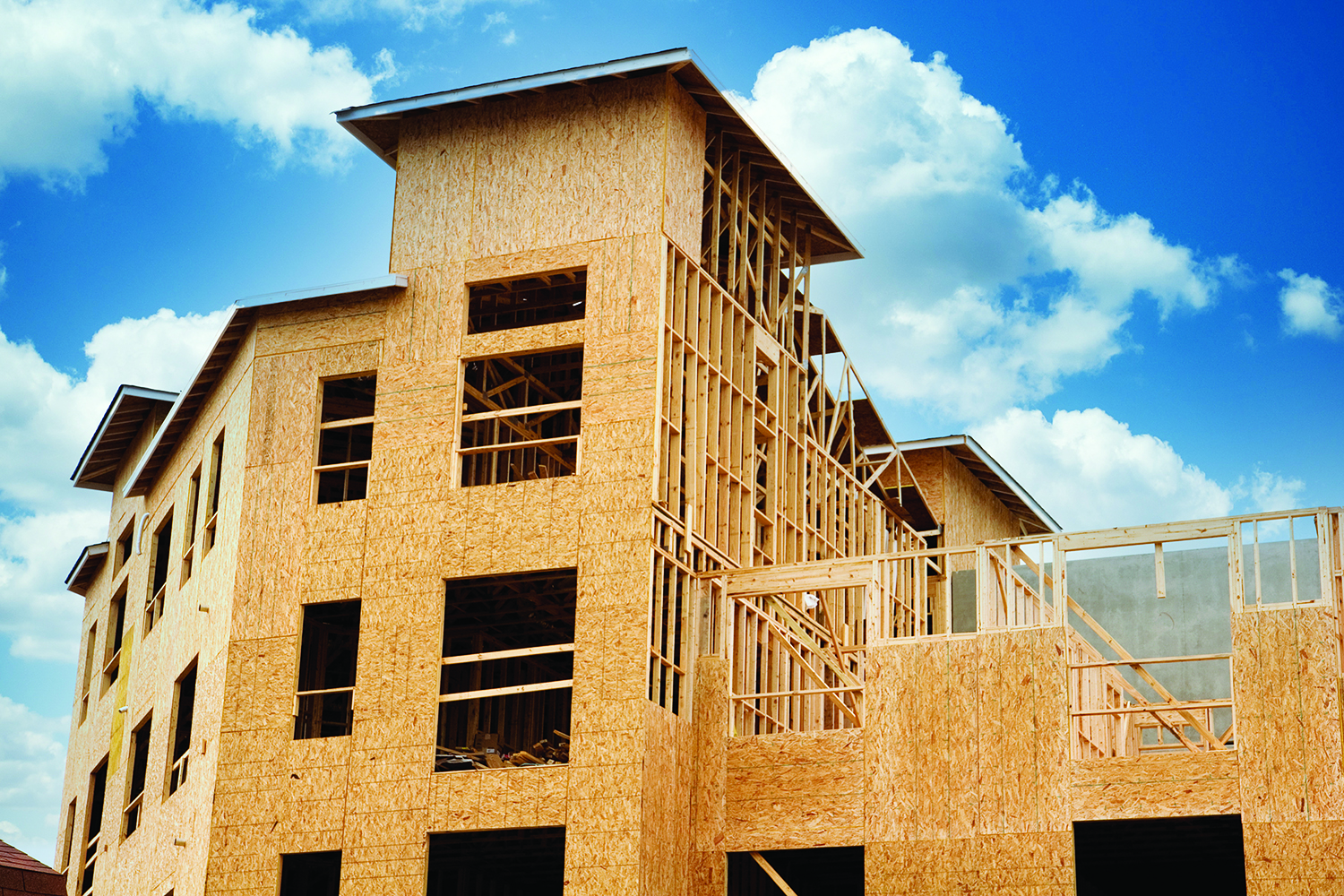
Rising inflation, the Iran War and other challenges appear to be putting a damper on multifamily construction so far this year, creating a dip after what is expected to be a record year for deliveries. iStock photo
Deliveries of new multifamily housing units are expected to reach its highest level in a decade in some areas of New Hampshire, thanks to a strong construction market in 2024 and 2025.
But rising inflation, the Iran War and other challenges appear to be putting a damper on multifamily construction so far this year, likely reducing the number of new units coming on the market in immediate coming years, industry officials say.
“There’s less activity today,” said Bill Norton, owner and president of Norton Asset Management in Manchester. “New construction has slowed down a lot.”
G. Frank Teas, president and CEO of Millyard Bank in Nashua, agreed that a multifamily slowdown of some sort is underway across the state.
“Over the last several years we have financed a number of multi-family properties, generally between four and 9 units throughout the state,” said Teas in an email to The Registry Review. “Lately, and we are uncertain why, the demand for financing of these units has slowed. Perhaps it is the lingering uncertainty with respect to the war. Certainly higher interest rates, and the talk of them increasing, does not help as higher rates reduce buying power, which leads to lower offers.”
Multifamily Still a Money-Maker
Despite immediate challenges facing multifamily developers, industry figures and housing advocates stress that there’s still multifamily building activity going on across the state and that multifamily investors remain bullish on New Hampshire.
“Multifamily housing seems to be a big money-maker for many investors and developers,” said Matt Giordano, an associate director of market analytics at CoStar Group who focuses on the Northeast market. “Multifamily properties are seen as more stabilized compared to offices and industrial properties.”
Of course, what’s good for multifamily investors and developers isn’t necessarily good for renters and those searching to buy homes, to wit: The overall acute shortage of homes across New Hampshire and elsewhere, coupled with strong demand, have relentlessly driven housing prices upward in recent years.
Those high prices have been hammering renters and homebuyers, but they’re exactly what multifamily investors and developers find attractive about New Hampshire.
Most Deliveries Since 2015
And they’ve indeed been building of late in New Hampshire.
Midyear multifamily housing data for many parts of the state are not available.
But CoStar, analyzing housing data in Rockingham and Strafford counties, estimates new deliveries in the two counties will hit about 1,100 units by the end of this year – the highest level in 10 years.
The reason: New housing construction in 2024 and 2025 hit 1,550 units and 1,714 units, respectively, in the two counties, according to CoStar data.
“Those are all above pre-pandemic levels,” said Giordano.
Those and other positive construction data from around the state partially explain the recent rise in New Hampshire’s overall apartment vacancy rate from a super-low 2 percent to about 4 percent, according to data.
In turn, recent new construction appears to have help ease rental price pressures a bit.
According to Apartments.com, the average monthly rent price in New Hampshire was about $1,899 as of early September, up a modest 1.4 percent year over year.
According to Zillow, the average New Hampshire rent price actually fell over the past year by $47 a month, or by about 2.2 percent, to $2,100.
But CoStar is projecting that new construction will only reach about 1,100 units this year in Rockingham and Stafford counties.
That’s still higher than pre-pandemic levels, but it definitely represents a significant slowdown that likely will reduce deliveries of new units in 2027 and 2028, said Giordano.
Experts Speculate on Causes
And what could be causing that slowdown?
A number of factors, including higher construction costs, tariff tensions with Canada, elevated interest rates, and nervousness over the Iran War, industry officials say.
Chris Walkley, senior commercial banking manager at Bank of New Hampshire, said his institution in recent years has definitely seen an increase in multifamily lending activity of all sorts – for purchases, refinancings and new construction.
As for new construction, he said Bank of New Hampshire generally focuses on multifamily deals falling in the $15 million to $20 million loan range – or projects with 50 units or more.
He pointed to Bank of New Hampshire’s recent participation in the new Apartments at Pearl and Orange project in Manchester, a $70 million development headed by affordable housing developer NeighborWorks Southern New Hampshire and financed with both private and public funds.
That project is expected to produce 126 affordable apartment units, 12 town homes and a new 455-space parking garage in downtown Manchester, replacing a municipal parking lot.
“Mid to large multifamily projects seems to work out best,” said Walkley.
But that’s not necessarily the case with smaller multifamily projects, he said.
“Smaller multifamily [developments] can be viable, but it’s much harder to make the returns work,” he said. “You need the economies of scale to make projects work.”
Some Projects Hit Headwinds
And that may partially explain the recent overall slowdown in multifamily construction so far this year in New Hampshire, as many industry figures have observed.
“Certainly the cost of materials has impacted construction and remodeling,” said Millyard’s Teas, who noted that a labor shortage within the trades is also hindering construction.
Meanwhile, some major multifamily proposals are running into their own harsh financial, legal and geographic realities in New Hampshire, experts say.
In Concord, a proposal to redevelop the mostly abandoned Steeplegate Mall into a mixed-use retail and residential site was recently delayed by a year due to a nasty legal dispute with JCPenny, a longtime major tenant in the mall.
In addition, the Steeplegate redeveloper, Onyx Partners, faces the daunting task of making major infrastructure upgrades if it’s serious about attracting new retail tenants and building as many as 600 new residential units at the site, industry officials say.
In all, there are about 2,800 housing units in the current planning pipeline in the Concord area – and number of factors make it highly unlikely they’ll all get built anytime soon, said Norton of Norton Asset Management.
“There’s just no way that’s going to happen, not in a city of 44,000 people,” he said of 2,800 units getting built over the next few years in Concord.
Demand for Existing Assets Stays Strong
One thing has remained constant on the multifamily front: investor interest in buying existing multifamily buildings in the state.
“Multifamily remains the most fundamentally supported asset class in the state,” Colliers International said in a recent report.
“New Hampshire has an affordability and supply problem that isn’t resolving itself anytime soon. The state continues to draw residents from Massachusetts and other high-cost markets, and that population pressure keeps rental demand strong across every major submarket from Nashua and Manchester up through Concord and the Seacoast.”
The Colliers reported noted that “two large Tuscan Village transactions [in Salem] closed in Q1, with 281 units trading at $137 million and 230 units at $125 million.”
The report added: “But activity hasn’t been limited to institutional-scale deals – six-unit buildings are trading alongside large developments.”
As long as the state’s severe supply-and-demand housing imbalance exists, the multifamily market should remain strong for both investors and developers, with normal ups and downs over time, said CoStar’s Giordano.
“Although near-term vacancy may increase as projects currently under construction are completed,” he said. “strong absorption, favorable demographic growth and a moderating development pipeline suggest Southern New Hampshire remains well positioned to maintain the strong performance of its rental apartment market over the longer term.”