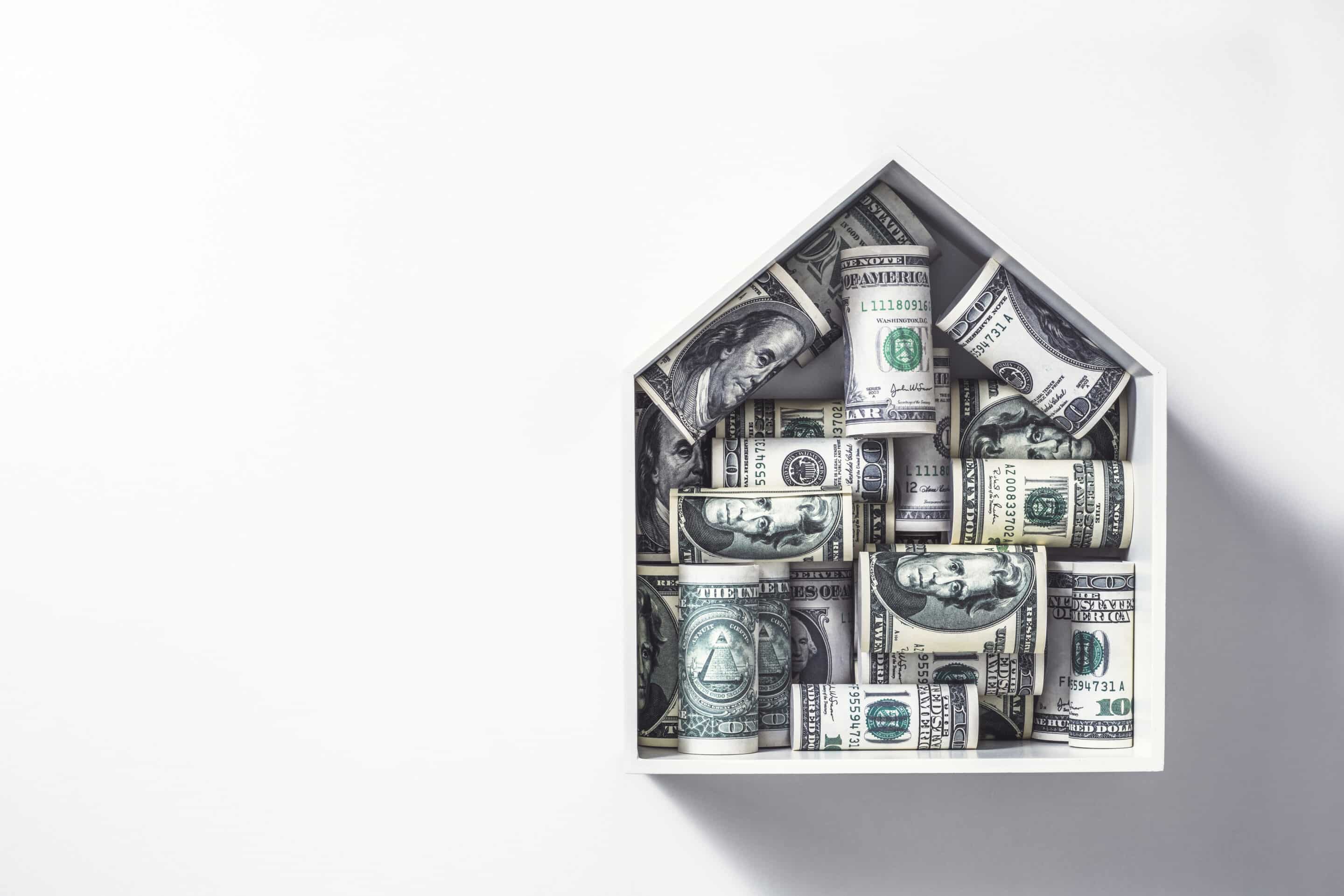
Industry experts say costs have increased significantly on every major line item in a construction project’s budget in recent years, making affordable housing harder to build. Image by Ekin Kizilkaya | iStock illustration
New Hampshire residents seem more receptive than ever to building new housing in their communities, a new survey by St. Anselm College shows.
But there’s only one problem: The high costs of home construction make it increasingly difficult to build the type of “affordable” housing residents say they want.
The bottom line, industry figures told The Registry Review, is that the economics of building affordable housing simply doesn’t add up in New Hampshire without various government subsidies, tax credits and other public policy measures designed enable lower rental and purchase prices.
“New construction has just become so expensive,” said Bill Norton, president of Norton Asset Management in New Hampshire. “The economics today are tough. You need subsidies to bring prices down – or a recession.”
There’s no doubt developers can, and regularly do, build upscale housing for more affluent consumers across the state – whether it’s new luxury homes in the Lakes region or high-end condominiums in Portsmouth.
But when it comes to new housing that the average Granite Stater can afford, the math is more daunting due to rising construction costs across the board.
High Rents Needed to Break Even
According to Norton, construction of new multifamily buildings with 30 or more units is now running at $300 to $400 per square foot, figures that BuildVision.com confirms.
If a developer shoots for a 10 percent return on an 800-square-foot apartment unit constructed at $300 per square foot, then the owner would need $2,000 in monthly market-rate rent just to pay off construction costs, notes Norton.
But when property taxes, insurance, security, operations and maintenance costs are included, a developer would need to get a minimum of $3,600 in market-rate rent per month to make the project work, he said.
And that $3,600 monthly rent is well above New Hampshire’s median rent today of $2,011, a level many describe as already unacceptably high.
Indeed, a recent report from the New Hampshire Housing Finance Authority, also known as New Hampshire Housing, estimated that the income a person needs to somewhat comfortably afford a rent today is about $80,440, or someone making about $38.67 per hour.
But the median hourly wage in New Hampshire today is only $26.10, far below the hourly affordability mark of $38.67, according to the quasi-public lender.
Norton and other industry leaders say that if the state truly wants to build more affordable housing in New Hampshire, then some sort of public assistance is needed, either in the form of direct subsidies or other public-policy measures designed to reduce home-construction prices.
President Donald Trump’s One Big Beautiful Bill Act, passed in 2025, included a significant increase in funding for Low Income Housing Tax Credits, which many affordable housing projects sell to finance themselves.
But the administration’s recently proposed changes to a foundational set of banking regulations under the Community Reinvestment Act could slash demand for those tax credits, critics say, leaving their future role in affordable housing finance uncertain.
Caps on Costs
But even with government-backed programs, pricing is still daunting.
When it awards tax credits for various housing projects, for instance, the state applies financial caps to projects, referred to as “Total Development Cost” (TDC) limits, that range from a maximum $397,000 per housing unit to a maximum $425,000 per unit, depending on the type of housing being funded.
The caps are admirably meant to contain potential runaway construction costs.
But the caps are still high, reflecting the high cost of construction in general in New Hampshire, from labor costs to material costs.
“Construction prices keep rising,” said Chuck Gilboy, senior director of multifamily finance and development at NH Housing. “It’s certainly become a more challenging environment.”
Josh Meehan, executive director of the Keene Housing Authority, said many factors have led to higher construction prices over the years, including land, engineering and other costs.
He added that people don’t realize that many housing projects partially funded by government programs can be more expensive than market-driven new housing, depending on the type of tenant being served.
Housing for the elderly and disabled, for instance, often require elevators, wider doors and hallways, and numerous other accessibility features that drive up per-foot construction costs, he said.
“It all conspires to make affordable housing more expensive,” he said. “We always have to make tough choices when it comes to what we can and can’t include in a project,” he said.
Costs Up in Every Area
Nick Taylor, executive director of advocacy group Housing Action New Hampshire, said final prices all come down to what many call the five “L”s of construction costs: land, lumber, labor, laws and lending.
If any of those “L” prices go up, the cost of new construction rises.
“At the end of the day, all these projects have to pencil out,” Taylor said. “That’s the challenge. It’s an unpredictable environment.”
He emphasized that tariffs, fuel prices, interest rates, material and labor costs keep changing the financial dynamics of housing projects.
“What worked last year may not work today,” he said. “It always ends up being about the math.”
Just in the past year alone, labor prices have increased by 3.5 percent to 4.5 percent in New Hampshire, while construction material prices have jumped by 10 to 15 percent, according to industry data.
Help from Zoning Reforms?
Not all housing projects need financial assistance from the government in order to make the math work, officials stress.
But government can help in other ways, such as permitting home construction on smaller lots of land or allowing less expensive manufactured and modular homes to be built in neighborhoods where they’re currently banned.
The ever-rising cost of construction comes as New Hampshire residents seem more open to construction of new housing in their communities, after years of fierce NIMBY opposition, according to a new survey by St. Anselm College’s Institute of Housing Policy and Practices.
In 2020, for instance, only 29 percent of surveyed New Hampshire voters agreed that zoning in their towns should be changed to allow more housing. But today 63 percent say zoning changes are needed to allow more housing, according to St. Anselm’s survey results.
In the past year alone, meanwhile, there’s been a 15-point shift in the percentage of people supporting single-family homes being built on smaller lots – from 59 percent in 2025 to 74 percent today.
“There’s been a sea-change in attitudes,” said Elissa Margolin, director of St. Anselm’s housing policy program. “People are clearly more receptive to more housing. The electorate seems a little more understanding about the issues involved with housing.”
But even if attitudes toward new housing are changing, new construction still comes down to costs.
“Higher costs are definitely limiting the ability to deliver more affordable housing,” said Margolin. “It’s a challenge, for sure.”